RFID Cards in the Maldives | Perfect Digital Solutions
Custom-printed RFID cards for access control, hotel room keys, attendance tracking, and event passes – available in 13.56MHz and 125kHz frequencies with full-colour PVC printing and optional encoding.
Introduction
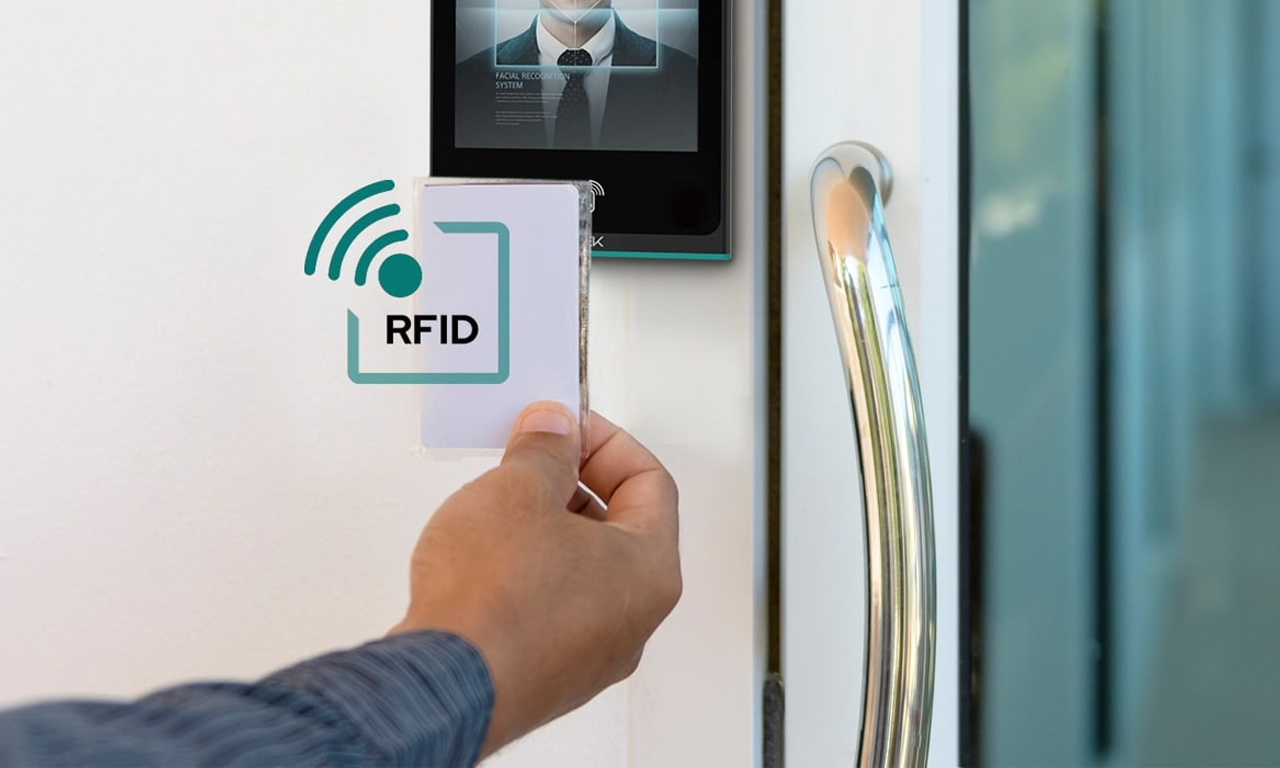
Radio Frequency Identification technology has become a foundational layer of how modern buildings, hotels, institutions, and events manage access and identity. The card you tap against a reader to enter a building, the key card that unlocks your hotel room, the card your employees use to log attendance at the start of their shift ”” these are all RFID cards. They are simultaneously a security tool, an access management system, and an identity credential.
Perfect Digital Solutions offers custom-printed RFID cards for businesses, institutions, and organisations across the Maldives. This is an upcoming service that we are developing to meet growing demand from the local market, and we welcome enquiries from organisations planning their access control, attendance, or event management infrastructure. This article explains what RFID is, how it works, and the specific card types and specifications we can supply.
What Is RFID and How Does It Work?
RFID stands for Radio Frequency Identification. The technology uses radio waves to transmit a unique identifier from a card (or other tag) to a reader without physical contact. Unlike a magnetic stripe card that must be swiped, or a barcode that must be visually scanned, an RFID card simply needs to be held within range of the reader ”” typically a few centimetres ”” and the data transfer happens automatically, in a fraction of a second.
Inside an RFID card is a tiny microchip connected to an antenna, both embedded within the card material and completely invisible from the outside. When the card enters the electromagnetic field generated by the reader, the antenna harvests energy from that field and the chip uses it to transmit its stored identifier. The reader captures this identifier and communicates with the access control system, attendance database, or other software to determine what action to take: unlock a door, record a time entry, validate an event ticket.
The entire process takes less than a tenth of a second. From the user’s perspective, it is instant and effortless ”” a tap and the door opens, or the entry is recorded.
Frequency Matters
RFID cards operate at specific radio frequencies, and it is important that the frequency of the card matches the frequency of the reader system. There are two common frequencies for proximity card applications:
13.56MHz (High Frequency): This is the more capable and more secure frequency range, used in cards compliant with the ISO 14443A standard. Common chip types at this frequency include Mifare Classic, Mifare Plus, and Mifare DESFire. These cards support encrypted communication, making them more resistant to cloning and appropriate for higher-security applications such as office access control, hotel room keys, and payment-adjacent systems.
125kHz (Low Frequency): This is an older and simpler frequency, used in cards such as EM4100. These cards transmit a simple fixed identifier with no encryption, making them easier to read and appropriate for lower-security applications such as basic attendance tracking and internal access at low-risk entry points. They are generally less expensive than high-frequency cards.
Before ordering RFID cards, it is essential to know which frequency your existing reader hardware supports. We advise on this when you enquire, and if you are establishing a new system from scratch, we can guide you toward the most appropriate specification.
Key Benefits of RFID Cards from Perfect Digital Solutions
Full-colour custom printing on standard PVC card. Our RFID cards are produced in the standard credit card size (85.6 x 54mm) on white PVC card with full-colour custom printing on one or both sides. Your organisation’s branding, logo, employee name, photo, or any other design element can be printed across the card surface. The chip and antenna are embedded within the card and completely invisible ”” externally, the card looks and feels identical to a premium printed business card or ID card.
Multiple chip options to match your system. We supply Mifare Classic, Mifare Plus, and Mifare DESFire chips at 13.56MHz, as well as EM4100 chips at 125kHz. When you enquire, tell us the make and model of your reader hardware (or the name of your access control system) and we will confirm the correct chip type.
Encoding and programming available. RFID cards can be supplied blank (unencoded), with a standard factory UID, or encoded with specific data for your system. Encoding requirements vary by access control system ”” some systems read only the card’s factory UID, while others require data to be written to the card’s memory sectors. We discuss encoding requirements at the time of order.
Reliable read range. Cards are tested to function at a read range of 3 to 10cm depending on the reader hardware and chip type ”” consistent with the proximity card standard and appropriate for tap-to-open and tap-to-record applications.
Compatible with mainstream access control and attendance systems. Our card specifications are aligned with the most widely deployed access control and time-attendance reader standards. If you are running a system from a recognised hardware brand, our cards will integrate with it.
Quantities from 10 to 10,000 and above. We supply cards for small organisations needing a handful of encoded keys as well as large institutions ordering thousands for staff, students, or event attendees.
How Our Process Works
Step 1: Enquire and specify your requirements. Contact us with details of your intended application, your reader hardware or access control system (if known), the chip frequency and type you need, and the quantity required. We will confirm the specification, pricing, and expected lead time.
Step 2: Design your card. Provide your logo, branding elements, and any variable data (such as employee names or ID numbers, if applicable). Our design team will produce a card layout for your approval. For large batches with variable data per card, we will discuss the data format with you.
Step 3: Confirm encoding requirements. If cards need to be encoded, we confirm the encoding specification with you or with your access control system provider before production begins. This step prevents the common and costly error of encoding cards incorrectly.
Step 4: Production. Cards are printed, laminated (where applicable), and encoded. Quality checks are applied to the print and to encoding integrity across the batch.
Step 5: Collection. Completed cards are packaged and ready for collection. For encoded batches, we can provide a delivery document confirming the UID or encoded data for each card if required by your system administrator.
Why Businesses and Institutions in the Maldives Need RFID Cards
The Maldives has a dynamic mix of organisations that benefit directly from RFID-based access and identity systems: hotels and resorts using room key cards, office buildings managing employee access across multiple floors, schools and colleges tracking student and staff attendance, clinics managing secure zone access, and events requiring verified entry for participants.
In a resort environment, the hotel room key card is a guest experience touchpoint as well as a security device. A well-designed card carrying the resort’s branding makes a stronger first impression than a plain white card, and the RFID functionality delivers the seamless, contactless guest experience that modern hospitality demands.
For offices and businesses, an RFID-based attendance system eliminates the inaccuracy and administrative burden of manual signing-in. The time and attendance data is captured automatically, and the card serves simultaneously as an employee ID that can be printed with the staff member’s name, photo, and department.
Libraries, gyms, clubs, and membership organisations use RFID cards to verify membership quickly at the point of entry, without requiring staff to check physical credentials.
Frequently Asked Questions
How do I know which chip type to order?
The easiest way is to check the documentation for your reader hardware or access control system. Most systems specify the supported card standard (for example, “ISO 14443A Mifare” or “EM4100 125kHz”). If you cannot locate this information, contact us with the brand and model of your reader and we will research the compatible card specification for you.
Can RFID cards be cloned or copied?
Lower-frequency cards such as EM4100 transmit a fixed identifier without encryption and can be cloned using widely available equipment. Higher-frequency Mifare cards, particularly Mifare DESFire, use strong encryption that makes cloning significantly more difficult. For security-sensitive applications ”” door access, payment systems, secure zones ”” we recommend specifying a high-frequency card with encryption support. For lower-risk applications such as attendance tracking, EM4100 is a practical and economical option.
Can you print variable data (different names or numbers) on each card in a batch?
Yes. For employee ID cards and student cards, we can print variable data ”” names, ID numbers, photos, department information ”” on each card in the batch from a data file you provide. This requires a properly structured data file (typically a spreadsheet), which we will discuss with you at the time of order.
Are the cards durable for daily use?
Yes. PVC card stock is inherently durable and resistant to normal handling wear. For applications where cards will be used many times per day over years, we recommend against unnecessary bending (which can eventually stress the embedded antenna) and suggest using a card holder or lanyard rather than keeping the card loose in a pocket with keys and coins.
Is RFID card printing available now?
RFID cards are an upcoming service at Perfect Digital Solutions. We are actively developing our supply chain and encoding capability to serve the Maldivian market, and we encourage organisations with upcoming requirements to contact us now. Early enquiries allow us to plan our capability around your timeline and ensure we can meet your needs when the service is fully available.
What is the minimum order for RFID cards?
We can supply from as few as 10 cards for small organisations or pilot installations. For very small quantities, per-card pricing reflects the setup costs involved. Larger orders of 100 cards and above offer meaningfully better per-card pricing.
Can you supply card holders, lanyards, or readers alongside the cards?
Contact us to discuss accessories. We are developing our range of complementary products and can advise on what is available or can be sourced alongside a card order.
Get Started with RFID Cards Today
If your organisation is planning an access control rollout, upgrading your attendance system, or exploring hotel room key solutions, Perfect Digital Solutions is the right partner to discuss your RFID card requirements with. We bring together quality printing, correct card specification, and encoding capability in a single service.
Contact us to enquire about RFID cards, discuss your specific requirements, and get a quote, or browse all our services to see the full range of smart card and printing solutions we offer.
Related Services: Staff Card | QR Code Card | Loyalty Card